Key Takeaways
- A persistent or severe toothache is often the first sign that the pulp inside a tooth is infected or inflamed.
- Sensitivity to heat or cold that lingers long after the source is removed, rather than fading in seconds, points to nerve involvement.
- Visible darkening of a tooth, a pimple-like bump on the gums, or facial swelling are signs that the infection may already be spreading.
- A cracked or chipped tooth accompanied by pain can expose the inner pulp to bacteria, making a root canal necessary.
- Some teeth that need root canal treatment show no symptoms at all. Only an X-ray can confirm infection in those cases.
What Are the Signs You Need a Root Canal?
Every year, around 15 million root canals are performed in the US, yet most patients aren’t sure when one is needed. If you’re noticing symptoms like tooth pain, gum swelling, or unusual sensitivity that won’t go away, it is likely that something is wrong inside the tooth. Dentists perform the root canal treatment to remove the infected or inflamed pulp, clear out the bacteria, and seal the tooth so it can be saved. The sooner you recognize the signs that you need a root canal, the better your chances of keeping the tooth long term.
Sign 1: Persistent or Severe Toothache
A toothache that doesn’t go away, or that throbs constantly, is one of the most telling signs that a root canal is needed. This type of pain means that the pulp tissue inside the tooth is infected or dying. The pain may then radiate to the jaw, ear, or nearby teeth and make it hard to pinpoint the exact source. Over-the-counter pain relief may dull it temporarily, but it won’t resolve the underlying infection.
Sign 2: Prolonged Sensitivity to Hot or Cold
It’s normal for teeth to be briefly sensitive to hot or cold foods and drinks. What’s not normal is sensitivity that lingers for 30 seconds or more after the temperature source is gone. This kind of persistent reaction suggests the nerve inside the tooth is inflamed or damaged. If cold drinks consistently cause a dull ache that takes a while to settle, that’s worth having evaluated.
Sign 3: Darkening or Discoloration of a Tooth
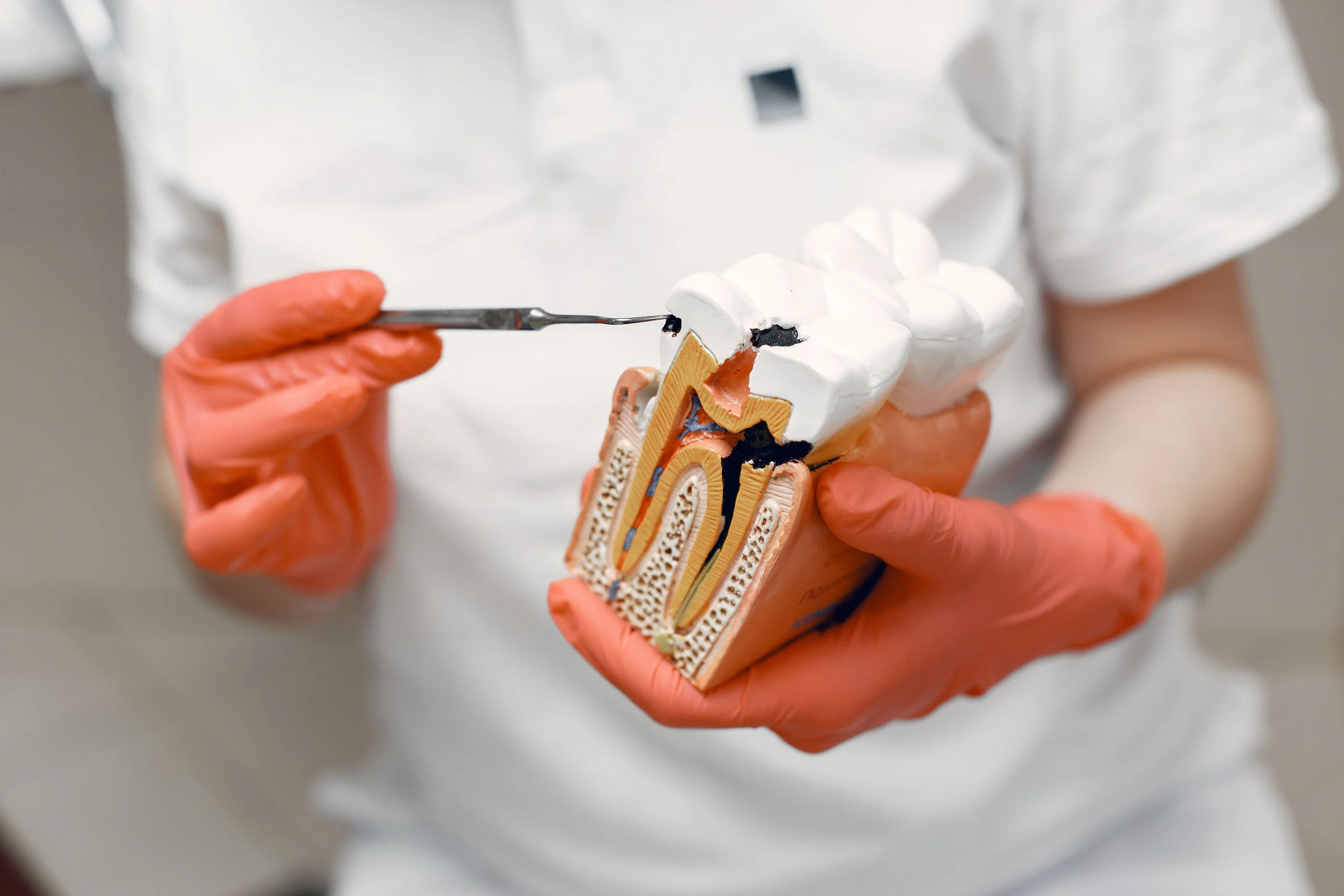
A tooth that turns gray, brown, or noticeably darker than the surrounding teeth may have a dying or dead pulp. This happens when the blood supply to the tooth is compromised, likely due to trauma or advanced infection. The discoloration itself isn’t painful in every case, which is exactly why it’s easy to overlook. Dr. Todd Christianson notes that patients at RiverRock Dental sometimes present with a discolored tooth they’ve had for years without realizing it signals internal damage.
Sign 4: Swollen or Tender Gums
Swelling near a specific tooth, especially if it’s tender to the touch, often points to an infection spreading from the root into the surrounding tissue. The swelling may come and go, but it won’t resolve on its own. In some cases, the gum tissue feels raised or puffy even without visible redness. This is different from general gum disease, which tends to affect multiple teeth rather than one localized area.
Sign 5: A Pimple-Like Bump on the Gums (Abscess)
A small raised bump on the gum, sometimes called a dental abscess or gum boil, is a sign that infection has built up at the root tip and found a path to drain. It may occasionally ooze and carry a bad taste. This is one of the clearest signs that a root canal is needed, as it confirms a bacterial infection is already present. An abscess will not go away on its own, but will continue to grow and can threaten your overall health if left untreated.
Sign 6: Pain When Biting or Chewing
Sensitivity or sharp pain when you bite down, especially on a specific tooth, can mean the ligaments surrounding the root are inflamed from infection. This is distinct from a sore tooth after a filling or recent dental work. If the pain is localized, consistent, and worsens with pressure, it’s one of the root canal signs that warrants prompt evaluation. Waiting tends to make the infection worse, not better.
Sign 7: A Cracked or Chipped Tooth with Pain
A cracked or chipped tooth isn’t always a root canal situation, but when that damage reaches deep enough that the pulp is exposed, bacteria can enter and cause infection. This is why a crack accompanied by pain, particularly throbbing pain or sensitivity that persists, needs to be assessed quickly. The crack itself may not be visible to the eye, and symptoms can develop weeks after the initial trauma.
When Is a Root Canal Necessary Even Without Symptoms?
This is where many patients are caught off guard: when is a root canal necessary if there’s no pain? Some teeth with dead pulp tissue have no symptoms at all. The infection is only picked up on an X-ray during a routine exam. This is one of the strongest reasons to keep up with regular checkups, since a dentist can spot changes in the bone and root structure before any pain develops.
Conclusion
If you’re experiencing one or more of the signs you need a root canal, including persistent pain, lingering sensitivity, gum swelling, or a discolored tooth, don’t wait to see if it improves on its own. Dental infections don’t resolve without treatment, and delaying care can mean a harder, more involved procedure later.
At RiverRock Dental, Dr. Christianson, Dr. Hanson, and Dr. Ostrander have provided root canal treatment in Shakopee, MN, to patients across the area for over 15 years.
Call (952) 445-5556, email riverrockdds@gmail.com, or visit the clinic at 403 1st Ave East, Shakopee, MN 55379.
Frequently Asked Questions
Yes. Some teeth with dead or dying pulp tissue produce no pain at all. The infection is only visible on an X-ray. This is one reason routine dental exams are so important. A dentist can identify infection before it becomes symptomatic or spreads to surrounding tissue.
There’s no safe waiting period once symptoms like throbbing pain, swelling, or an abscess appear. Dental infections can extend to the jaw, neck, or other teeth relatively quickly. Most dentists treat root canal cases as soon as possible to prevent the infection from worsening.
The procedure itself is performed under local anesthesia and is comparable to getting a filling in terms of discomfort. Leaving an infected tooth untreated, meanwhile, typically leads to worsening pain, spreading infection, and eventually tooth loss.
In most cases, it will, especially when the tooth is restored with a crown afterward. A treated tooth can last many years with proper care. However, outcomes depend on the extent of infection, the tooth’s structure, and how well the patient maintains oral hygiene afterward.
Without treatment, the infection continues to spread. The tooth may eventually need to be extracted. Beyond the tooth itself, an untreated abscess can spread to the jaw or surrounding structures, which may require more serious medical intervention.